
Is Finessven.com Safe or a Scam? Let’s Find Out

Author: Adam Collins
Online shopping has made our lives easier, but it’s also opened the door for shady websites pretending to be legit stores. One of the latest names floating around is Finessven.com, which claims to be a “global online store that delivers the latest fashion apparel.” Sounds promising, right? But is it really what it says it is—or just another scam hiding behind a sleek homepage? Let’s dig in.
In a nutshell: Finessven.com claims to sell fashion apparel, but several red flags suggest it may not be trustworthy. It uses copied content, has a newly registered domain, appears to imitate Amazon, and is linked to a dissolved company. Plus, its customer reviews are inconsistent—one even mentions buying bikes from a clothing store. Proceed with caution.
Copied Content – Part of a Scam Network?
Scams no longer come one by one—they’re manufactured in droves. When we searched the phrase on their “About Us” page:
“is your global online store that delivers latest fashion apparel for you! We have handmade toys, dresses, tops, bottoms and jewelry for girls and ladies.”
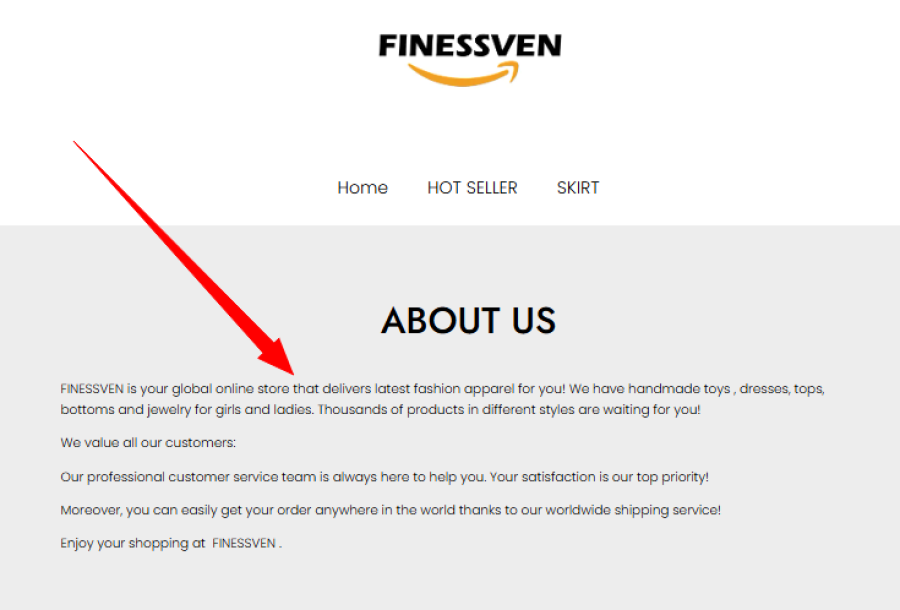
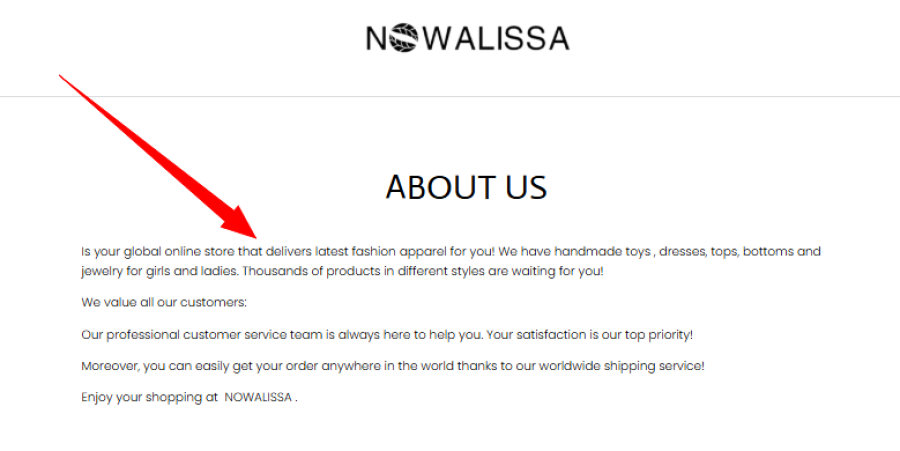
The exact wording appeared on multiple unrelated websites, including Nowalissa.com. This copy-paste pattern is a common tactic used by scam networks that clone or recycle fake store templates under new names.
If several sites share the same “About Us” text, it’s a major sign they’re part of a larger network of fraudulent shops, possibly operated by the same group.
Newer Registration Date
According to Whois and ScamAdviser, Finessven.com was registered in May 2025. That’s quite recent—barely a few months old.
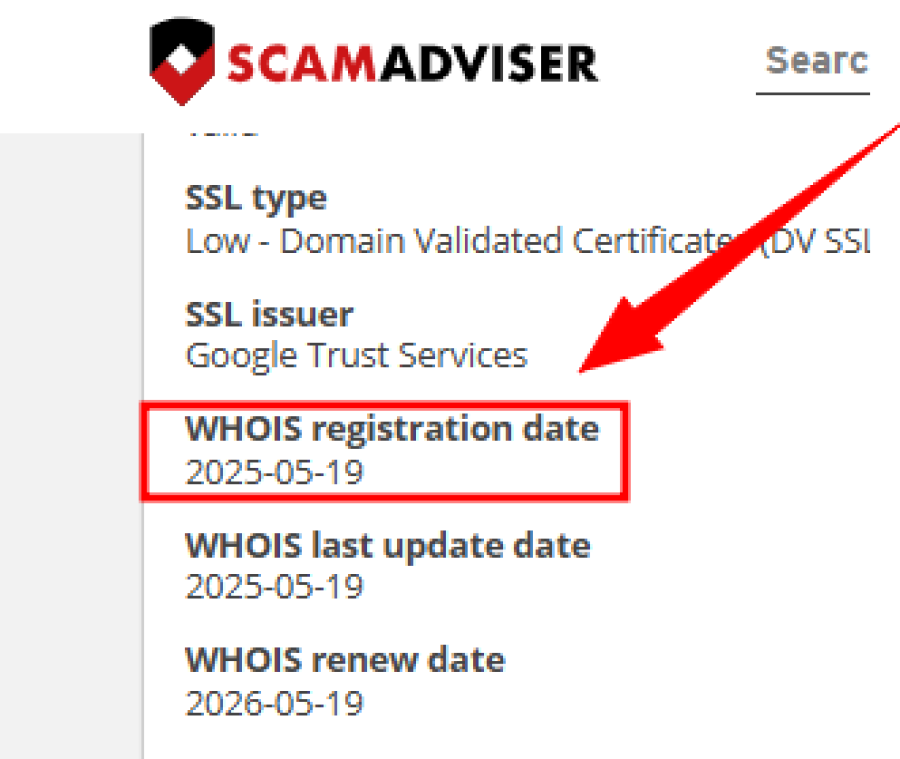
Now, a new domain alone doesn’t automatically mean “scam.” Every legit business has to start somewhere. But when combined with other warning signs like copied text and unclear ownership, a short lifespan becomes another piece of the puzzle.
Imitating Amazon Shopping?
They say imitation is the sincerest form of flattery—but in the scam world, it’s just misleading.
Finessven.com’s layout and product descriptions seem to mimic Amazon’s style, from the way products are displayed to the “discounted” price tags that make deals look irresistible. Some customers even claimed the site pretends to sell Amazon clearance stock—a classic trick to build fake credibility.
If a site looks too much like Amazon but has no connection to it, that’s a flashing red warning sign.
Who Owns Finessven.com?
On their website, Finessven.com lists Yicheng Network Technology Limited as the owning company.
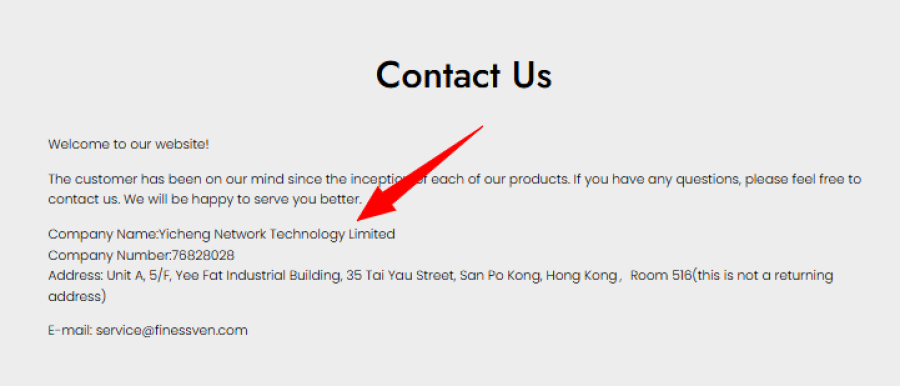
And to make matters worse, searches for that company name bring up multiple similar entities, none of which appear to be connected to different businesses.
If a store’s supposed parent company has been dissolved—and can’t be traced through official channels—it raises serious questions about who’s actually behind it.
Customer Reviews
This is where things get even more confusing.
On Trustpilot, Finessven.com has mixed reviews. One reviewer said:
“10/10 experience every time. I’ve bought a couple of bikes off here—all have arrived within 48 hours. LOVE the cheap prices!”
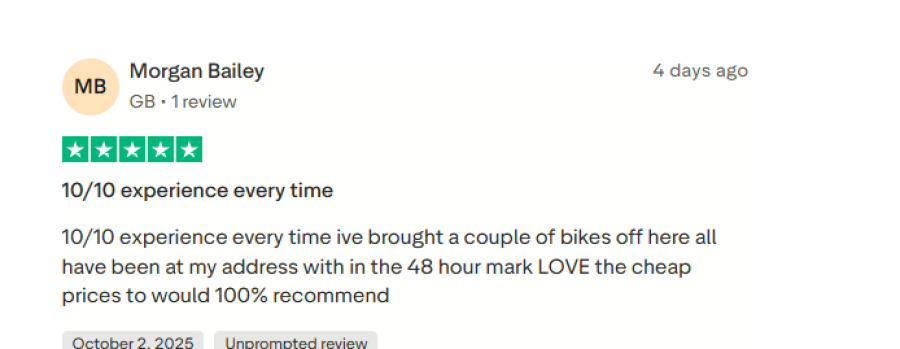
Hold up—bikes? For a site that’s supposed to sell dresses and jewelry, that’s suspicious.
Another reviewer paints a very different picture:
“This site is blatantly a scam claiming to sell massively discounted items. It says it sells expired Amazon products, which is nonsense. It already has a low trust score across scam-detection sites.”
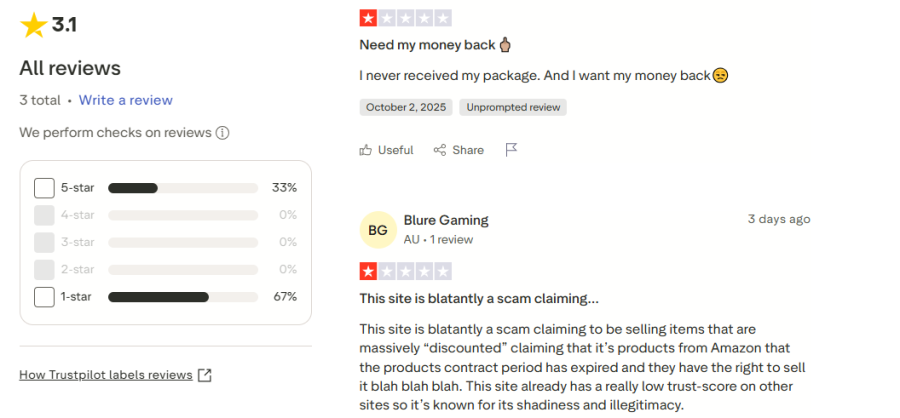
The inconsistency between reviews (and the odd claims about buying bikes from a fashion store) strongly suggests fake or manipulated feedback.
Bottom Line: Is Finessven.com a Scam?
After examining all the evidence, Finessven.com shows multiple red flags that make it risky.
Here’s a quick summary of what we found:
- Copied content shared with other suspicious websites
- New domain registered in May 2025, too new to have credibility
- Mimics Amazon’s layout and discount patterns
- Claims ownership by a dissolved company, Yicheng Network Technology Limited
- Inconsistent and questionable customer reviews
Verdict: There’s a high possibility that Finessven.com is unsafe. If you’re looking for new clothes, it’s safer to stick to well-known online stores with transparent ownership, valid customer support, and genuine reviews.
FAQ
Q: Can I get my money back if I bought from Finessven.com?
If you paid by credit or debit card, contact your bank immediately and explain that you may have been scammed. They might be able to reverse the charge through a chargeback.
Q: How can I check if a website is safe before shopping?
Look for:
A valid SSL certificate (https://)
Transparent contact details
Verified company registration
Genuine reviews on independent platforms
A domain older than a few months
Q: Why do scam stores keep reappearing with new names?
Because once one domain gets exposed, scammers quickly register another and reuse the same design, text, and fake listings. It’s like a game of digital whack-a-mole.
Q: Is every new store a scam?
No, not every new store is bad—but if it hides ownership details, copies content, and offers huge discounts, tread carefully.
Final Tip: When in doubt, don’t check out. Always research before you click “Buy Now.” And download the ScamAdviser App to keep you protected.
This article has been written by a scam fighter volunteer. If you believe the article above contains inaccuracies or needs to include relevant information, please contact ScamAdviser.com using this form.

Report a Scam!

Have you fallen for a hoax, bought a fake product? Report the site and warn others!
Scam Categories
Help & Info
Top Safety Picks
Your Go-To Tools for Online Safety
Protect yourself online with our expert-vetted tools and the official ScamAdviser App
- ScamAdviser App - iOS : Your personal scam detector, on the go! Check website safety, report scams, and get instant alerts. Available on iOS
- ScamAdviser App - Android : Your personal scam detector, on the go! Check website safety, report scams, and get instant alerts. Available on Android.
Popular Stories
As the influence of the internet rises, so does the prevalence of online scams. There are fraudsters making all kinds of claims to trap victims online - from fake investment opportunities to online stores - and the internet allows them to operate from any part of the world with anonymity. The ability to spot online scams is an important skill to have as the virtual world is increasingly becoming a part of every facet of our lives. The below tips will help you identify the signs which can indicate that a website could be a scam. Common Sense: Too Good To Be True When looking for goods online, a great deal can be very enticing. A Gucci bag or a new iPhone for half the price? Who wouldn’t want to grab such a deal? Scammers know this too and try to take advantage of the fact. If an online deal looks too good to be true, think twice and double-check things. The easiest way to do this is to simply check out the same product at competing websites (that you trust). If the difference in prices is huge, it might be better to double-check the rest of the website. Check Out the Social Media Links Social media is a core part of ecommerce businesses these days and consumers often expect online shops to have a social media presence. Scammers know this and often insert logos of social media sites on their websites. Scratching beneath the surface often reveals this fu
Disclaimer: This article was originally published in 2018 and has been updated in October 2025 to reflect more current information, resources, and advice. Scams and recovery options continue to evolve, so always double-check with your bank, payment provider, or local consumer protection authority for the latest guidance. So the worst has come to pass - you realise you parted with your money too fast, and the site you used was a scam - what now? Well first of all, don’t despair!! If you think you have been scammed, the first port of call when having an issue is to simply ask for a refund. This is the first and easiest step to determine whether you are dealing with a genuine company or scammers. Sadly, getting your money back from a scammer is not as simple as just asking. If you are indeed dealing with scammers, the procedure (and chance) of getting your money back varies depending on the payment method you used. PayPal Debit card/Credit card Bank transfer Wire transfer Google Pay Bitcoin PayPal Good news: PayPal gives you strong protection. You can file a dispute within 180 days of your purchase. You can get a refund if: Your order never arrives, and the seller cannot provide proof of delivery. The scammer sends you something completely different (e.g., a controller instead of a PlayStation). The product condition was misrepresented (sold as new but arrives used). The item is missing undisclosed parts. The item is counterfeit. Start your claim directly through Pay